Home / Insulation / Rubber foam insulation
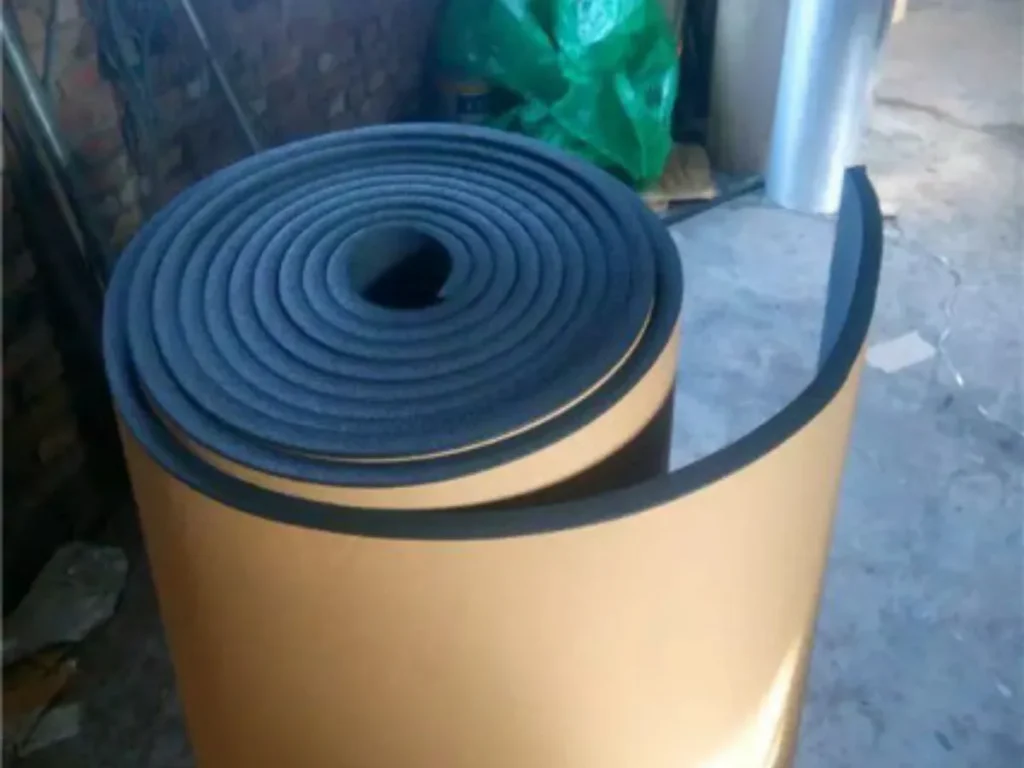
Self-Adhesive Rubber Foam Insulation Sheet (Elastomeric) in Pakistan
Self-adhesive, closed-cell rubber foam insulation sheet, also known as elastomeric insulation, rubber insulation sheet, NBR foam or Armaflex-type insulation. Available in 3 mm to 25 mm thickness on 1.2 m × 20 m (4 × 66 ft) rolls. Peel, stick and seal AC ducts, chilled water pipes and cold rooms. In stock at our shop in Saddar, Karachi, with delivery to every city in Pakistan.
- 3, 6, 9, 13, 19 and 25 mm
- 1.2 m × 20 m rolls
- 4 × 66 ft
- Self-adhesive backing
- 45 to 70 kg/m³
- Closed-cell, stops condensation
- Roll, foot, metre or cut to size
What is rubber foam insulation?
Rubber foam insulation, known technically as elastomeric insulation, is a flexible, black, closed-cell rubber foam (usually NBR, nitrile rubber) used on cold and hot ducts, pipes and equipment. In Pakistan it is also called rubber insulation sheet, NBR foam, or by brand names such as Armaflex, Aeroflex, K-Flex and Insulflex. Each tiny cell is sealed, so moisture cannot get in. That stops condensation, the sweating and dripping you see on AC ducts and chilled water pipes, especially in humid cities like Karachi.
Our sheets come with a self-adhesive backing. Peel off the release paper and press the sheet onto a clean duct or surface, with no separate glue needed. That makes installation faster, cleaner and more consistent.
Rubber foam insulation sheet is available in Pakistan from A.Q TRADERS in Karachi. We import our sheets ourselves, so there are no middlemen: you get consistent, high-quality sheet at competitive rates, from 1 roll to bulk orders.
Benefits of rubber foam insulation
- Stops condensation and dripping: the closed-cell foam is its own vapour barrier, so AC ducts and chilled water pipes stay dry.
- Quick self-adhesive installation: peel and stick, with no separate glue, which saves time and labour on site.
- Keeps cooling in: low thermal conductivity reduces energy loss from ducts and pipes, so your AC and chiller work less.
- Clean and fibre-free: no dust or itchy fibres, which makes it suitable for offices, hospitals, food plants and homes.
- Flexible and easy to fit: bends around ducts, bends and fittings and cuts cleanly with a sharp knife.
- Reduces noise and vibration: dampens duct noise and machine vibration.
- Long-lasting: resists moisture and mould, so it keeps working for years.
Rubber foam insulation sheet specifications
| Specification | Details |
|---|---|
| Material | Closed-cell elastomeric rubber foam (NBR) |
| Backing | Self-adhesive on one side, with peel-off release paper |
| Colour | Black |
| Thickness | 3 mm, 6 mm, 9 mm, 13 mm, 19 mm and 25 mm |
| Roll size | 1.2 m × 20 m (4 ft × 66 ft) |
| Coverage per roll | About 260 sq ft (24 m²) |
| Density | 45 to 70 kg/m³ |
| Cell structure | Closed-cell |
| Thermal conductivity | Typically 0.034 to 0.036 W/m·K at 20°C |
| Temperature range | Typically −40°C to +105°C |
| Water vapour resistance | Very high: the closed cells act as a built-in vapour barrier |
| Water absorption | Very low |
| Fire behaviour | Self-extinguishing |
| Surface | Fibre-free and dust-free; resists mould and fungal growth |
| Outdoor use | Protect from direct sunlight with cladding or UV coating |
| Origin | Imported |
| Sold as | Full roll, by the foot or metre, or cut to size |
How to install self-adhesive rubber foam insulation
No separate glue needed. Peel, stick and seal in five steps.
- Clean the surface. It must be dry and free of dust, oil and rust, or the adhesive will not grip properly.
- Measure and cut. Cut the sheet with a sharp knife, leaving a few millimetres extra so joints press tightly together.
- Peel and press. Peel the release paper back a little at a time and press the sheet on from the centre outwards, without stretching it.
- Seal the joints. Butt the edges tightly and seal every seam with rubber insulation tape or adhesive, so no moisture can get in.
- Protect it outdoors. If it is exposed to direct sun, cover it with aluminium cladding or a UV-protective coating.
Where rubber foam insulation is used
HVAC contractors, AC installers, factories and building projects across Pakistan use it on:
AC and HVAC ducts
Supply and return ducts, to keep air cold and stop duct sweating.
Chilled water pipes
Chiller lines, AHUs and fan coil units, where condensation is the biggest problem.
Cold rooms and refrigeration
Walls, doors, refrigeration lines and equipment in cold storage.
Factories and plants
Process lines, tanks and equipment that run cold or warm.
Water tanks and pipes
Rooftop tanks and water lines, to keep water cooler in summer.
Noise and vibration
Thin sheets as anti-vibration pads under machines and to quieten ducts.
Rubber foam insulation sheet price in Pakistan
Because we import directly, our rubber foam insulation rates stay competitive. Rates depend on the thickness, the number of rolls and current import costs, which move with the dollar rate. We can quote per roll, per foot or per metre. Send us the thickness and quantity, or your duct and pipe sizes, on WhatsApp and we’ll reply with today’s rate and the delivery cost to your city.
Rubber foam insulation questions
What is the price of rubber foam insulation sheet in Pakistan?
It depends on the thickness (3 mm to 25 mm), the quantity and the current import cost. Send us the thickness and number of rolls, or your duct sizes, on WhatsApp and we’ll give you today’s rate per roll, per foot or per metre.
Is this the same as Armaflex?
Armaflex, Aeroflex, K-Flex and Insulflex are brand names for elastomeric rubber foam insulation. Our self-adhesive sheets are the same type of closed-cell rubber foam insulation, used for the same jobs: AC ducts, chilled water pipes and cold rooms.
What is the difference between elastomeric, NBR and rubber foam insulation?
They are the same product. Elastomeric insulation is the technical name, NBR (nitrile butadiene rubber) is the rubber it is made from, and rubber foam or rubber insulation sheet is what most people call it.
How many rolls do I need?
One 1.2 m × 20 m roll covers about 260 sq ft. For a duct, multiply its perimeter by its length. For example, a 2 ft × 1 ft duct has a 6 ft perimeter, so a 100 ft run needs about 600 sq ft, which is about 3 rolls including some extra for joints. Send us your duct sizes and we will work it out.
Can rubber foam insulation be used outdoors?
Yes, but protect it from direct sunlight with aluminium cladding or a UV-protective coating. Otherwise sunlight will make the surface crack over time.
Rubber foam insulation or glass wool: which is better?
For AC ducts and chilled water pipes, rubber foam insulation is better because its closed cells block moisture and stop condensation. Glass wool is the more economical choice for roofs, walls and ceilings.
Can I buy less than a full roll?
Yes. We sell rubber foam insulation by the full roll, by the foot or metre, or cut to the size you need. There is no minimum order.
Do you deliver outside Karachi?
Yes. We deliver to every city in Pakistan. Most orders reach Lahore and Islamabad in 2 to 3 days.