Home / Insulation / Rock wool
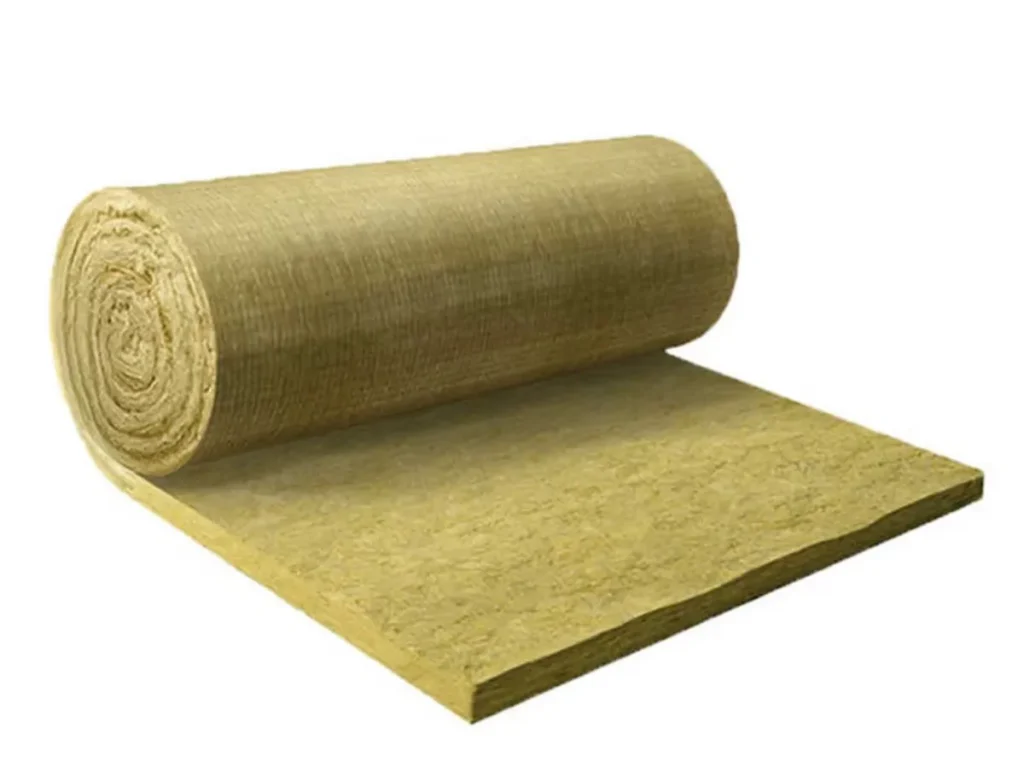
Rock Wool Insulation Rolls (Mineral Wool) in Pakistan
Yellowish-brown rock wool rolls, 1 m × 3 m, in 25 mm, 50 mm and 100 mm thickness and densities from 40 to 120 kg/m³. Rated up to 750°C and Class A1 non-combustible, for boilers, steam lines, hot equipment and fire-rated walls. In stock at our shop in Saddar, Karachi, with delivery to every city in Pakistan.
- 25, 50 and 100 mm (1, 2 and 4 inch)
- 1 m × 3 m rolls
- 40, 60, 80, 100 and 120 kg/m³
- Up to 750°C continuous
- Class A1 non-combustible
- Full roll or cut to size
What is rock wool?
Rock wool, also called mineral wool or stone wool, is insulation made by melting volcanic rock such as basalt and spinning it into fine fibres. The fibres are pressed into dense rolls that trap still air, which slows the flow of heat. Because it is made from stone, it handles far higher temperatures than glass wool and does not burn, so it is the usual choice for hot equipment and for fire protection.
Rock wool insulation is available in Pakistan from A.Q TRADERS, a rock wool insulation supplier in Karachi since 1964. We import our rolls ourselves, so there are no middlemen: you get consistent, high-quality rock wool at competitive rates, from 1 roll to bulk orders.
Benefits of rock wool
- Handles high heat: works continuously up to 750°C, so it can go directly on boilers, steam lines, ovens and hot pipes.
- Does not burn: rated Class A1 non-combustible, the highest fire rating, and its fibres do not melt below 1,000°C. That makes it a strong fire barrier in walls, partitions and around equipment.
- Saves fuel and gas: keeps heat inside boilers, pipes and tanks, so less energy is wasted and running costs go down.
- Keeps surfaces safe to touch: cuts the outside temperature of hot equipment, protecting workers from burns and keeping plant rooms cooler.
- Absorbs noise: its dense fibres soak up sound, making it ideal for generator rooms, partitions and acoustic panels.
- Holds its shape: denser and firmer than glass wool, so it does not sag or settle over time.
Rock wool specifications
| Specification | Details |
|---|---|
| Material | Rock wool (mineral wool / stone wool) made from volcanic basalt rock |
| Colour | Yellowish brown |
| Form | Rolls |
| Thickness | 25 mm (1 inch), 50 mm (2 inch) and 100 mm (4 inch) |
| Roll size | 1 m × 3 m (about 3.3 × 9.8 ft) |
| Coverage per roll | 3 m² (about 32 sq ft) |
| Density | Available in 40, 60, 80, 100 and 120 kg/m³ |
| Facing | Plain (unfaced) |
| Service temperature | Up to 750°C (continuous) |
| Melting point | Above 1,000°C |
| Fire reaction | Class A1 non-combustible (BS 476 Part 4 / EN 13501-1) |
| Thermal conductivity | Typically 0.034 to 0.040 W/m·K at 25°C, lower at higher density. It rises as the temperature goes up. |
| Thermal resistance (R-value) | About 0.6 to 0.7 m²·K/W (25 mm), 1.25 to 1.5 (50 mm) and 2.5 to 2.9 (100 mm) |
| Origin | Imported |
| Sold as | Full roll or cut to size |
Which density do you need?
| Density | Best for |
|---|---|
| 40 kg/m³ | Light and economical. Sound absorption in partitions, ceilings and walls. |
| 60 kg/m³ | General thermal and acoustic insulation in walls, roofs and partitions. |
| 80 kg/m³ | Fire-rated walls, generator rooms and acoustic panels. |
| 100 kg/m³ | Hot pipes, ducts, tanks and industrial equipment. |
| 120 kg/m³ | Boilers, steam lines and high-temperature equipment, where a firm, tough roll is needed. |
Where rock wool is used
Factories, power plants, contractors and fire safety projects across Pakistan use it for:
Boilers and steam lines
Wrapped around boilers, steam pipes and headers to hold the heat in and save fuel.
Hot pipes, tanks and ducts
On hot water, thermal oil and exhaust lines, and storage tanks.
Ovens, dryers and machinery
In the casings of industrial ovens, dryers and process equipment.
Fire-rated walls
Inside partitions, shafts and fire barriers, where a non-combustible material is required.
Generator rooms and soundproofing
In walls, ceilings and acoustic panels to cut noise from generators and machines.
Power plants and refineries
On turbines, process lines and equipment running at high temperatures.
Rock wool price in Pakistan
Because we import directly, our rock wool rates stay competitive. Rates depend on the thickness, density, the number of rolls and current import costs, which move with the dollar rate. Send us the thickness, density and quantity on WhatsApp, or the size of the pipe or equipment you want to insulate, and we’ll reply with today’s rate and the delivery cost to your city.
Rock wool questions
What is the price of rock wool in Pakistan?
It depends on thickness (25, 50 or 100 mm), density (40 to 120 kg/m³), the number of rolls and the current import cost. Send us those details on WhatsApp and we’ll give you today’s rate per roll.
Rock wool vs glass wool: what is the difference?
Rock wool is made from volcanic rock, is denser, and works up to 750°C. Glass wool is made from glass fibres, is lighter and more affordable, and works up to about 250°C. Choose rock wool for boilers, hot pipes, fire-rated walls and heavy soundproofing, and glass wool for roofs, AC ducts and ceilings.
Is rock wool the same as mineral wool or Rockwool?
Mineral wool is the general name for both rock wool and glass wool, but in Pakistan it usually means rock wool. Stone wool is another name for rock wool. ROCKWOOL is also the name of a well-known brand; our rock wool is imported and does the same job.
Is rock wool fireproof?
Rock wool is rated Class A1 non-combustible, the highest fire rating. It does not burn and its fibres do not melt below 1,000°C, which is why it is used in fire-rated walls and fire barriers. The fire rating of a complete wall also depends on the boards and frame used with it.
What temperature can rock wool handle?
Our rock wool works continuously up to 750°C. For furnaces, kilns and other equipment hotter than that, use ceramic wool instead.
How many rolls of rock wool do I need?
Each 1 m × 3 m roll covers 3 m² (about 32 sq ft). Divide your area by 3 m² or 32 sq ft and add 5 to 10% for joints and cutting. For example, a 30 m² wall needs about 11 rolls. For pipes and boilers, send us the diameter and length and we will work it out for you.
How is rock wool installed on walls and roofs?
In walls and partitions, the rolls are cut to size and fitted tightly between the frame, then covered with boards or cladding. Under roofs, the rock wool is laid between or over the purlins and held in place with wire mesh or pins before the roof sheets or ceiling go on. On pipes and equipment, it is wrapped around and covered with aluminium cladding. Fit it without gaps, as gaps let heat and sound through.
Is rock wool hazardous to handle?
Rock wool fibres can irritate the skin, eyes and throat while you cut and fit it. Wear gloves, long sleeves, a dust mask and safety glasses, and cut it with a sharp knife to keep dust down. Once it is installed and covered, it does not cause problems.
Can I buy less than a full roll?
Yes. We can cut rock wool to the size you need, and there is no minimum order.
Do you deliver rock wool outside Karachi?
Yes. We deliver to every city in Pakistan. Most orders reach Lahore and Islamabad in 2 to 3 days.